

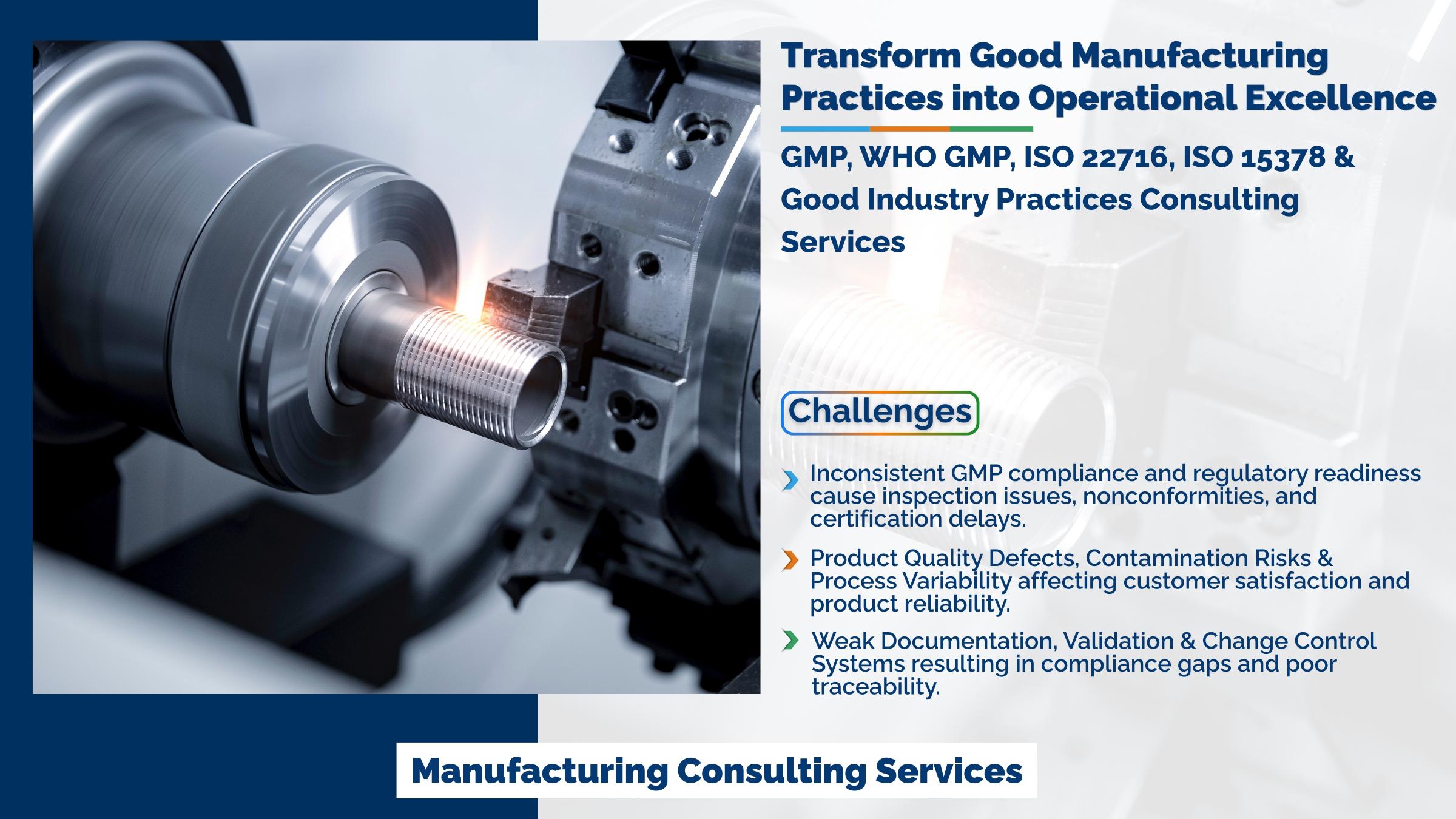
GMP, WHO GMP, ISO 22716, ISO 15378 & Good Industry Practices Consulting Services
Transform Good Manufacturing Practices into Operational Excellence
Consistent product quality, regulatory compliance, operational efficiency, and customer confidence depend on robust manufacturing systems. Whether producing pharmaceuticals, food, cosmetics, herbal products, medical packaging, or consumer goods, organizations must implement Good Manufacturing Practices (GMP) to minimize risks, improve product quality, and meet national and international regulatory requirements.
Smartedge Consulting helps organizations build practical, risk-based manufacturing systems that improve product quality, strengthen compliance, reduce operational risks, and enhance business performance.
As an experienced GMP consulting company, Smartedge provides end-to-end GMP implementation, WHO GMP consulting, ISO 22716 consulting, ISO 15378 consulting, Food GMP consulting, GMP audits, training, and certification readiness services across regulated industries.
Business Challenges We Help Solve
Manufacturing organizations face increasing expectations from regulators, customers, certification bodies, and global markets. Inconsistent manufacturing practices, inadequate documentation, contamination risks, poor process controls, and changing regulatory requirements can affect product quality, compliance, and business reputation.
Common challenges include:
- Inconsistent manufacturing processes
- Product contamination and quality failures
- Regulatory compliance requirements
- Documentation and record management
- Validation and process control
- Personnel competency and GMP awareness
- Supplier and material quality management
- Hygiene and contamination control
- Audit and inspection readiness
- Export market compliance
Smartedge helps organizations establish effective Good Manufacturing Practices that improve operational performance while ensuring product quality, regulatory compliance, and customer confidence.
How Good Manufacturing Practices Drive Business Success
Good Manufacturing Practices create a structured framework for controlling manufacturing operations, facilities, personnel, equipment, materials, documentation, and quality systems.
A well-implemented GMP system enables organizations to:
- Improve product quality and consistency
- Reduce manufacturing defects and rework
- Strengthen regulatory compliance
- Improve process standardization
- Minimize contamination risks
- Enhance traceability and documentation
- Increase customer confidence
- Support domestic and international market access
- Improve operational efficiency
- Build a culture of continual improvement
GMP becomes a business performance system rather than simply a regulatory requirement.
Our GMP & Good Industry Practice Consulting Services
General Good Manufacturing Practices (GMP)
Develop structured manufacturing systems aligned with internationally accepted GMP principles.
- GMP Gap Assessment
- GMP Documentation
- Standard Operating Procedures (SOPs)
- Validation Support
- Process Controls
- Documentation Systems
- Internal Audits
- GMP Training
- Regulatory Inspection Readiness
WHO GMP Consulting
Support pharmaceutical and healthcare organizations in implementing World Health Organization Good Manufacturing Practices.
- WHO GMP Implementation
- Quality Risk Management
- Facility Compliance Reviews
- Documentation Systems
- Validation Support
- Internal Audits
- Regulatory Readiness
ISO 22716 – Cosmetic Good Manufacturing Practices
- ISO 22716 Gap Assessment
- Cosmetic GMP Implementation
- Hygiene Programs
- Documentation Development
- Internal Audits
- Employee Training
- Certification Readiness
ISO 15378 – Primary Packaging Materials for Medicinal Products
- ISO 15378 Implementation
- Packaging GMP Systems
- Risk Assessments
- Documentation Development
- Internal Audits
- Certification Support
Food GMP & Codex Good Manufacturing Practices
- Codex GMP Implementation
- Good Hygiene Practices (GHP)
- Sanitation Programs
- Food Manufacturing Controls
- Process Standardization
- Documentation Systems
- Internal Audits
- Food Safety Integration
Herbal & Traditional Medicine GMP
- Herbal GMP Implementation
- Raw Material Controls
- Manufacturing Documentation
- Traceability Systems
- Quality Assurance
- Internal Audits
- Regulatory Readiness
Industries We Support
- Pharmaceuticals
- Nutraceuticals
- Medical Devices
- Cosmetics & Personal Care
- Herbal & Ayurvedic Products
- Food & Beverage
- Food Ingredients
- Packaging Materials
- Contract Manufacturing
- Healthcare Products
- Consumer Goods
Business Outcomes You Can Expect
- Improved manufacturing consistency
- Stronger product quality and reliability
- Better regulatory compliance
- Reduced contamination and operational risks
- Enhanced documentation and traceability
- Improved process efficiency
- Increased customer confidence
- Better inspection and audit readiness
- Successful GMP certification and compliance
- Stronger business reputation and market access
Why Smartedge
Smartedge Consulting combines expertise in Good Manufacturing Practices, Quality Management, Food Safety, Operational Excellence, Risk Management, and Regulatory Compliance to deliver practical solutions that improve both compliance and business performance.
Our multidisciplinary consulting approach helps organizations establish manufacturing systems that create measurable operational improvements while supporting sustainable growth.
Why Organizations Choose Smartedge
- ✔ Industry Expertise
- ✔ Practical Implementation
- ✔ Integrated Consulting
- ✔ Long-Term Partnership
Frequently Asked Questions
Do you provide GMP implementation services?
Yes. Smartedge provides end-to-end GMP implementation, including gap assessments, documentation, SOP development, training, internal audits, and regulatory inspection readiness.
Do you support WHO GMP compliance?
Yes. We help pharmaceutical and healthcare organizations implement WHO GMP requirements and prepare for regulatory inspections and customer audits.
Do you implement ISO 22716 and ISO 15378?
Yes. We provide implementation, documentation, internal audits, training, and certification support for ISO 22716 (Cosmetic GMP) and ISO 15378 (Primary Packaging Materials for Medicinal Products).
Can Smartedge conduct GMP audits and training?
Yes. We conduct GMP audits, compliance assessments, employee training, internal auditor programs, and continual improvement initiatives across pharmaceutical, food, cosmetics, packaging, and herbal industries.
Ready to Build Manufacturing Excellence?
Whether you are implementing GMP, WHO GMP, ISO 22716, ISO 15378, improving manufacturing quality, preparing for regulatory inspections, or strengthening operational performance, Smartedge Consulting helps you transform Good Manufacturing Practices into measurable business value.
Improve quality. Reduce risk. Build manufacturing excellence.
Talk to Our Experts | Request a Proposal